The cannabis beverage industry has developed an extensive vocabulary of technical terms, abbreviations, slang, and scientific language that can overwhelm newcomers. From cannabinoid chemistry to manufacturing processes to consumption culture, understanding this terminology is essential for navigating the market, reading product labels, and communicating effectively about THC drinks. This comprehensive glossary defines over 100 terms you're likely to encounter, organized by category for easy reference. Bookmark this page and return whenever you encounter unfamiliar language in your cannabis beverage journey.
Cannabinoid Terms
THC (Tetrahydrocannabinol): The primary psychoactive compound in cannabis responsible for the characteristic "high." In beverages, it's typically nano-emulsified for water compatibility. The most common cannabinoid in THC drinks.
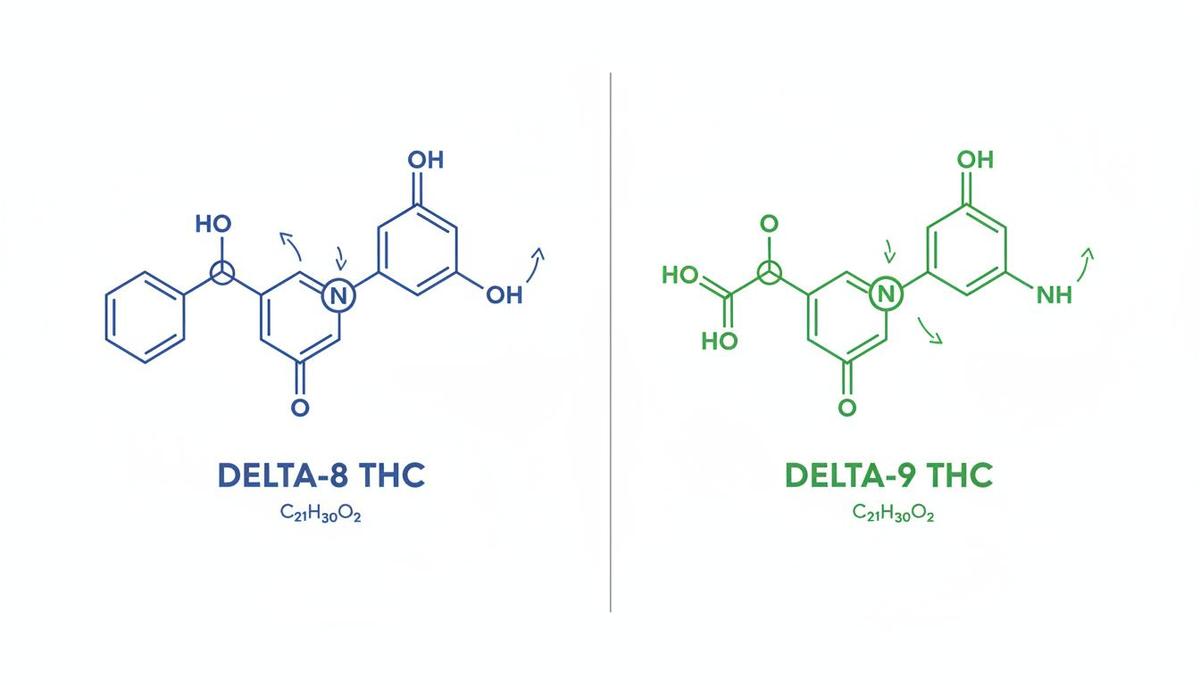
Delta-9-THC: The most abundant and well-known form of THC, producing the classic cannabis high. It's the standard reference when discussing THC potency and effects. Found in both marijuana and hemp-derived products.
Delta-8-THC: A naturally occurring THC isomer that produces milder, more clear-headed effects than delta-9. Typically synthesized from hemp-derived CBD. Legally ambiguous and less studied than delta-9.
CBD (Cannabidiol): A non-psychoactive cannabinoid often included in THC beverages to modulate effects. May reduce anxiety, inflammation, and THC-induced side effects. Does not produce a high.
CBG (Cannabigerol): A minor cannabinoid sometimes called the "mother of all cannabinoids" because other cannabinoids synthesize from it. Being studied for potential anti-inflammatory and neuroprotective properties.
CBN (Cannabinol): A minor cannabinoid formed as THC degrades. Often associated with sedating effects and included in sleep-focused THC beverages.
CBC (Cannabichromene): Another minor cannabinoid being researched for potential anti-inflammatory and mood-elevating properties. Occasionally found in full-spectrum THC drinks.
THCa (Tetrahydrocannabinolic Acid): The acidic, non-psychoactive precursor to THC found in raw cannabis. Converts to THC through heat (decarboxylation). Not typically relevant to beverages.
THCV (Tetrahydrocannabivarin): A THC variant that may suppress appetite and produce more alert, stimulating effects at low doses. Rare in beverages but emerging in specialized formulations.
Product Type Terms
Nano-Emulsification: The process of breaking THC oil into microscopic particles (20-200 nanometers) and surrounding them with an emulsifier to create water-soluble THC. Essential technology for THC beverages that enables rapid absorption and consistent dosing.
Full Spectrum: Products containing THC along with other naturally occurring cannabinoids and terpenes from the cannabis plant. Believed to produce enhanced effects through the entourage effect.
Broad Spectrum: Products containing multiple cannabinoids and terpenes but with THC removed or reduced to trace levels. Rare in THC-specific beverages but common in CBD products.
Isolate: Pure THC with all other cannabis compounds removed. Produces straightforward, predictable effects without entourage benefits.
Water-Soluble THC: THC that has been processed to dissolve in water-based liquids, achieved through nano-emulsification or other technologies. The foundation of all THC beverages.
Liposomal: An alternative delivery technology that encapsulates THC in lipid spheres for enhanced absorption. Less common than nano-emulsification but used by some premium brands.
Dosing and Potency Terms
Milligram (mg): The standard unit for measuring THC content in beverages. Common doses range from 2.5mg to 100mg per package.
Microdose: A very low dose, typically 1-2.5mg of THC, designed for subtle, functional effects without significant impairment. Popular for daytime productivity and creativity.
Standard Dose: Generally considered 10mg of THC, established as the benchmark serving size in early legal cannabis markets.
Macrodose: A high dose, typically 25mg or more, producing strong effects for experienced users or those with high tolerance.
Tolerance: The body's reduced response to THC after repeated exposure, requiring higher doses to achieve equivalent effects. Develops with regular use and decreases during abstinence periods.
Reverse Tolerance: A rare phenomenon where someone becomes more sensitive to THC effects over time rather than less. Sometimes observed in new consumers.
Entourage Effect: The theory that cannabinoids, terpenes, and other cannabis compounds work synergistically to produce enhanced therapeutic and experiential effects beyond what isolated THC provides.
Bioavailability: The percentage of consumed THC that actually enters systemic circulation and produces effects. THC beverages typically have higher bioavailability than traditional edibles due to nano-emulsification.
First-Pass Metabolism: The process where THC is processed by the liver before entering systemic circulation, converting delta-9-THC into the more potent 11-hydroxy-THC metabolite.
Consumption Experience Terms
Onset: The time between consumption and when effects first become noticeable. For THC beverages, typically 15-30 minutes.
Peak: The period when effects are at their maximum intensity, typically 90 minutes to 2 hours after consumption for beverages.
Duration: The total time from consumption until effects have fully subsided, typically 3-6 hours for THC drinks.
Come-Up: The period between initial onset and peak effects when intensity is increasing.
Comedown: The period after peak effects when intensity is gradually decreasing.
Afterglow: A lingering positive state of mild relaxation and contentment that persists after primary effects have subsided.
Couch Lock: A state of deep physical sedation where moving feels effortful. Associated with high doses or specific cannabinoid/terpene profiles.
Body High: Physical sensations of relaxation, warmth, heaviness, and comfort throughout the body.
Head High: Mental effects including euphoria, altered perception, creativity enhancement, and cognitive shifts.
Munchies: Increased appetite commonly experienced after THC consumption, caused by THC's interaction with hunger-regulating brain regions.
Legal and Regulatory Terms
2018 Farm Bill: Federal legislation that legalized hemp and hemp-derived products containing less than 0.3% delta-9-THC by dry weight. The legal foundation for hemp-derived THC beverages.
Hemp: Cannabis plants containing 0.3% or less delta-9-THC by dry weight. Federally legal in the United States.
Marijuana: Cannabis plants containing more than 0.3% delta-9-THC. Federally illegal but legal for recreational use in 24 states as of 2026.
Schedule I: The DEA's classification for drugs with no accepted medical use and high abuse potential, including marijuana-derived THC. Hemp-derived THC occupies a legal gray area.
Certificate of Analysis (COA): Third-party laboratory test results verifying product potency, purity, and safety. Essential for verifying product quality.
State-Licensed: Products sold through government-regulated dispensaries or retailers that have obtained proper licenses. Indicates legal compliance and quality standards.
Recreational Cannabis: Legal marijuana programs allowing adults 21 and older to purchase and consume cannabis products without medical justification.
Medical Cannabis: Programs allowing patients with qualifying conditions to access cannabis products with a doctor's recommendation or card.
Product Quality Terms
Third-Party Tested: Products analyzed by independent laboratories with no financial stake in the product's sale. Gold standard for quality verification.
Potency: The strength of THC effects, determined by the milligram dose and individual factors. Higher potency means stronger effects.
Purity: Freedom from contaminants including pesticides, heavy metals, residual solvents, and microbial organisms. Verified through lab testing.
Homogeneity: Even distribution of THC throughout the product, ensuring each sip or serving contains the intended dose. Critical for beverages.
Shelf Stability: A product's ability to maintain potency and quality over time when properly stored. Important for inventory management and freshness.
Terpenes: Aromatic compounds in cannabis that contribute to flavor, aroma, and potentially influence effects through the entourage effect.
Manufacturing Terms
Extraction: The process of isolating cannabinoids from cannabis plant material using methods like CO2 extraction, ethanol extraction, or hydrocarbon extraction.
Decarboxylation: Heating cannabis to convert THCa into active THC. Necessary for creating psychoactive cannabis products.
Emulsifier: A substance that allows oil and water to mix by reducing surface tension. Essential for creating stable THC beverages.
Homogenization: The process of ensuring even distribution of THC particles throughout a beverage to prevent separation and ensure consistent dosing.
Pasteurization: Heat treatment to eliminate microorganisms and extend shelf life. Used in some cannabis beverages for safety and stability.
Conclusion
Familiarity with cannabis beverage terminology transforms you from a confused newcomer into a confident, knowledgeable consumer. This glossary covers the essential vocabulary you'll encounter, but the industry evolves rapidly with new terms emerging as technology and products advance. When you encounter unfamiliar language, don't hesitate to ask budtenders at dispensaries, contact manufacturers directly, or research terms online. The cannabis community is generally welcoming and eager to educate curious consumers. The more you learn, the better equipped you'll be to find products that perfectly match your preferences and needs.