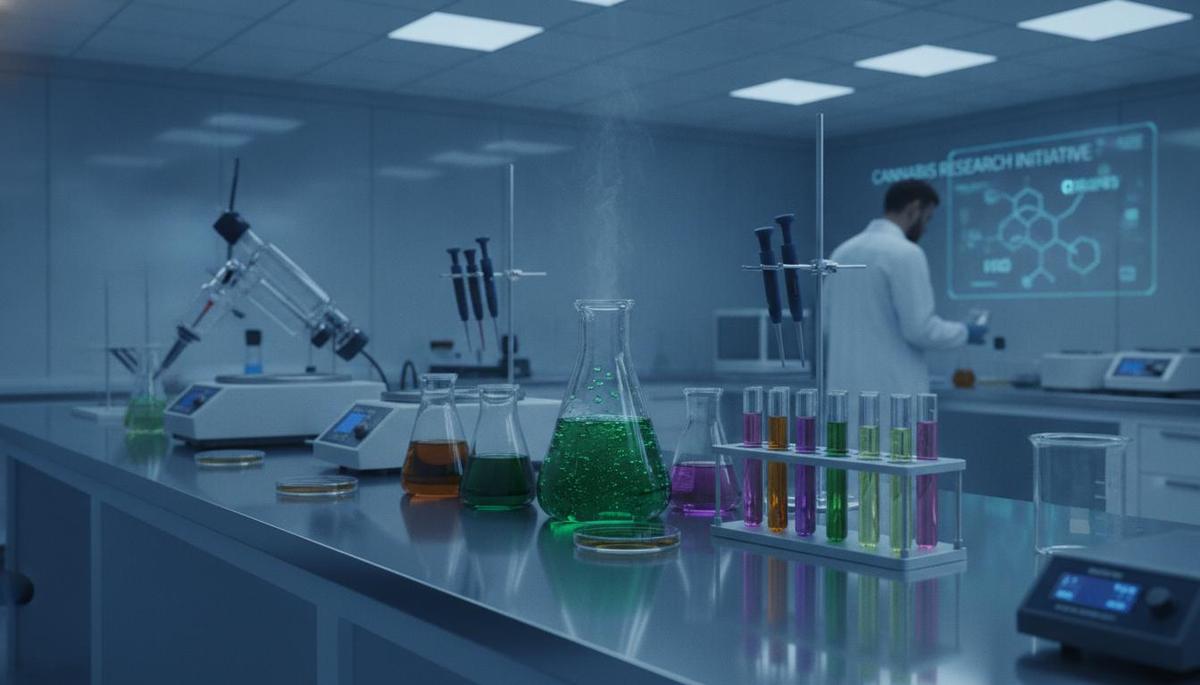
Like all organic compounds, THC degrades over time when exposed to various environmental conditions. Understanding how THC stability works in beverages helps consumers store products properly, manufacturers design longer-lasting formulations, and everyone maximize the potency and quality of their cannabis drinks. This guide examines the science of THC degradation, the factors that accelerate or prevent it, and best practices for maintaining optimal product quality.
The Chemistry of THC Degradation
THC degradation is primarily an oxidation process. When THC molecules are exposed to oxygen, light, and heat, they undergo chemical changes that convert them into other compounds. The primary degradation pathway converts delta-9-THC into CBN (cannabinol) and delta-8-THC. CBN is a mildly sedating cannabinoid with significantly less psychoactive potency than delta-9-THC. This means that as THC degrades, the product becomes less potent in terms of the classic cannabis "high" while potentially becoming more sedating. Additional degradation can eventually convert cannabinoids into fully inactive compounds.
Factors Affecting THC Stability
Light
UV light is the most destructive force for THC. Photodegradation breaks THC molecules apart and accelerates conversion to CBN. Clear glass bottles provide no protection. Amber or opaque bottles offer some protection. Aluminum cans provide the best protection. Storage in dark environments is essential.
Heat
Higher temperatures accelerate all chemical reactions, including THC degradation. Room temperature (70°F/21°C) causes gradual degradation. Temperatures above 80°F significantly accelerate the process. Refrigeration dramatically slows degradation. Freezing essentially halts degradation.
Oxygen
Oxygen drives the oxidation reactions that degrade THC. Exposure to air after opening begins oxidation immediately. Headspace in containers allows oxygen contact. Proper sealing minimizes oxygen exposure. Some packaging uses nitrogen flushing to remove oxygen.
pH
The acidity or alkalinity of the beverage affects THC stability. Extremely low pH (high acidity) may accelerate degradation. Neutral to mildly acidic pH (3-5) is typical for beverages and provides reasonable stability. Nano-emulsification may affect stability depending on emulsifier chemistry.
Water Activity
Water facilitates chemical reactions. Beverages obviously contain water, so this factor can't be eliminated. However, lower water activity (more concentrated formulations) may offer slightly better stability.
Degradation Rates
Under ideal refrigerated storage (35-40°F, darkness), THC in beverages degrades at approximately 5-10% per year. At room temperature with some light exposure, expect 20-30% annual degradation. In hot conditions (above 80°F), degradation can reach 50% or more within months. Direct sunlight can degrade significant potency within days or weeks. These rates vary by formulation, packaging, and product quality.
Shelf Life Guidelines
Unopened products stored cold: 12+ months with minimal degradation. Unopened products at room temperature: 6 months for acceptable quality. Opened products refrigerated: consume within 3-7 days. Opened products at room temperature: consume within 24 hours. Products exposed to heat: check for degradation signs. When in doubt about potency, consume sooner rather than later.
Signs of Degradation
Indicators your THC beverage has degraded: weaker effects than expected at normal doses; more sedating effects than typical (CBN presence); change in color or clarity; separation or cloudiness; off smells or tastes; and visible particles or sediment not present originally. Note that some changes are cosmetic and don't affect potency, while others indicate significant degradation.
How Manufacturers Improve Stability
Quality producers use several techniques: nano-emulsification that creates more stable cannabinoid particles; antioxidants to prevent oxidation; opaque or amber packaging to block light; nitrogen flushing to remove oxygen; pH optimization for stability; and refrigerated storage recommendations. Premium brands invest significantly in stability testing and formulation optimization.
Storage Best Practices
To maximize your THC beverage potency: refrigerate immediately after purchase; store away from direct sunlight; keep containers sealed tightly; don't leave in hot cars or sunny windowsills; consume opened products quickly; check manufacture dates and choose fresher products; and avoid bulk-buying more than you can consume within a few months.
Conclusion
THC in beverages does degrade over time, but proper storage dramatically slows this process. Refrigeration, darkness, and airtight sealing are the three keys to maintaining potency. Under ideal conditions, THC beverages maintain near-original potency for 6-12 months. Under poor conditions, significant degradation can occur within weeks. By understanding the factors that affect THC stability and following best practices for storage, you ensure that every drink delivers the experience you paid for.